
A few years ago, Dell introduced Concept Luna, a laptop design featuring modular components that could be upgraded through a robotic upgrade station at a retailer. Similar to a vending machine, the system allowed a robot to handle the upgrade process.
Let’s talk about modular computers that started with the IBM PCjr, moved to an IBM modular computer concept (I was approached to be CEO for one of the potential spin-off companies), the Dell effort, and finally, the Intel concept this week.
We’ll close with my Product of the Week, a brand-new laptop that could be ideal for an executive or someone interested in a lot of performance in a small, quiet form factor.
A Brief History of Modular PCs
The IBM PCjr was a revolutionary desktop design based on the ability to update the product easily. Updated components were packaged kind of like game cartridges in that you buy the basic system and then upgrade it by purchasing and adding components that were covered in plastic and could be plugged into the base unit.
It was an amazing design until the folks doing the more expensive IBM PC figured out it was so much better and cheaper that folks would likely prefer it over IBM’s more expensive, non-modular products. So, they crippled the PCjr by removing a lot of what would have made it attractive for business (the PCjr was positioned as a consumer PC). While making it unattractive for business, they also made it unappealing for the rest of us, so the product failed.
Now, compare that approach to what Steve Jobs did with the iPod. He realized customers would likely prefer a phone with the iPod’s functionality. Instead of crippling the iPhone to protect the iPod, he leaned into the trend and ended up nearly owning the entire smartphone segment. That strategic move is largely why Apple is one of the most valuable companies in the world.
If IBM had done the same with the PCjr, it would have protected its leadership position in PCs and might have been in that business today.
The next modular effort was the Archistrat 4s server from a company staffed with ex-IBM people called the Panda Project. It used a passive backplane, allowing components to be easily plugged in or removed to add accessories. The entire system was housed in a vault-like case — made of heavy metal, lockable for security, and designed to be bolted to the floor — so offices without server rooms could keep it in open areas without worrying about theft.
That company failed because the executives had inferior financial skills and wasted a lot of money on parties, jets, and other things not related to the business.
The next attempt was the IBM MetaPad, a modular computer with a core computing unit about the size of a cigarette pack, containing everything except a battery, keyboard, or display. It could be placed in a laptop case or docked on a desktop.
A company called Antelope Technologies pursued a similar concept, aiming to create a market for it. However, due to its unique design and low initial production volume, it was relatively expensive, as were the docks that could have been integrated into cars, hospitals, hotel rooms, or even airplane seats, providing full PC functionality and an easy upgrade path for the core technology.
The problem was that the core module wasn’t very powerful due to thermal and cost constraints, and docks for it never became widely available in the places they were envisioned. As a result, it never reached the necessary volume to drive down costs. Performance was also an issue — mobile PC technology at the time wasn’t efficient enough to make the concept viable in a laptop form. By then, IBM had begun shifting away from the PC market and was unwilling to throw money at a project like this. So, it died.
More recently, Dell developed a green project, Concept Luna, that used a robotic upgrade machine that could be placed at locations like Best Buy so users could quickly and cheaply upgrade, modify, or personalize their laptop. This was one of the most well-thought-out concepts I’ve ever seen. The benefits started with a massive potential for reduced e-waste, lower lifetime PC ownership costs, and potentially more loyal customers. Sadly, Dell decided not to bring it to market.
And that brings us to …
Intel’s New Modular Laptop and Desktop Vision
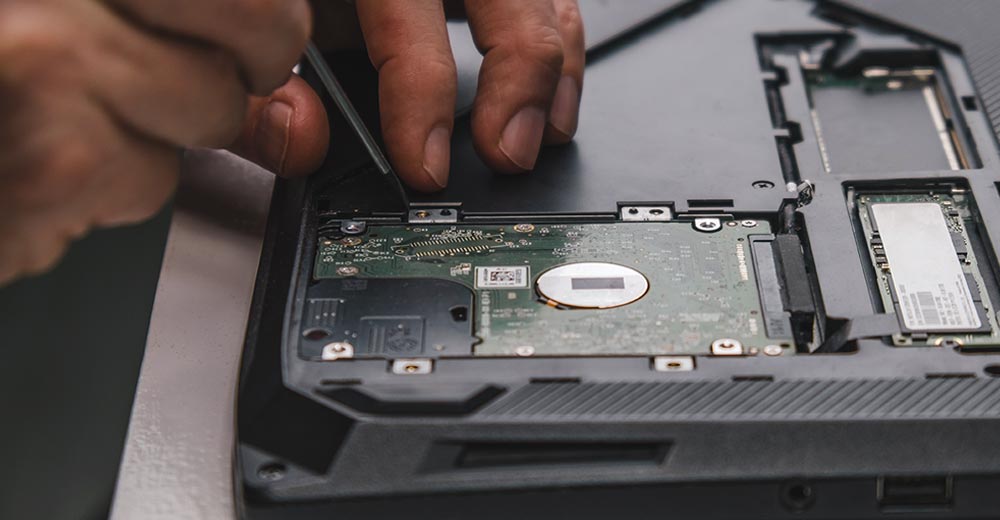
Like Dell’s Concept Luna, Intel’s modular effort appears primarily focused on reducing e-waste. It would have similar advantages to other earlier modular concepts by reducing life cycle costs, increasing design innovation by making it far less expensive to develop new design concepts, allowing the parts of a laptop that don’t wear out to remain in service, and enabling greater customization in the market.
This approach could lower upgrade costs for Intel and other component manufacturers while driving post-sale demand for CPUs and GPUs. It would also make it far easier for users to repair their laptops and provide relatively low-cost upgrades for almost every internal component.
On the desktop side, Intel appears to be revisiting the Panda Project concept of a passive backplane, making it easier to upgrade motherboard components. Even though desktop PCs are more straightforward to upgrade, swapping out the motherboard is a PITA, and I often just donate my old desktop and start with a new case when I get a new motherboard.
With Intel’s design, instead of unscrewing the motherboard and hoping the new one fits, users could simply replace one or more plug-in cards, similar to the PCjr concept decades ago. Water-cooled implementations might still be tricky, but you could get around that by using quick disconnects and CPU modules that would hook up to the case’s water-cooling solution.